How to Tame Tinnitus—an Integrative Approach
Tinnitus, the perception of ringing, buzzing, humming, clicking, or pulsating sounds without an external source, is increasingly recognized as far more than a simple disorder of the ears. Modern research now suggests that tinnitus involves a complex interaction between the auditory system, the brain, the nervous system, emotional stress pathways, sleep regulation, inflammation, and even musculoskeletal tension patterns involving the jaw and neck.
For some individuals, tinnitus is a mild annoyance. For many patients, it becomes deeply disruptive, affecting concentration, sleep, emotional well-being, relationships, and overall quality of life. One of the greatest challenges is that conventional medicine still lacks a universally effective pharmaceutical treatment. Hearing aids, sound therapy, cognitive-behavioral therapy, and stress management may help many patients, but many continue to search for additional options.
This has led growing numbers of patients to visit Tao of Wellness clinics to explore integrative approaches, including acupuncture and Traditional Chinese Medicine (TCM), which have been used to treat tinnitus for thousands of years. While the scientific evidence is still evolving, a growing body of clinical research suggests acupuncture may reduce tinnitus severity, improve sleep, decrease stress reactivity, and improve quality of life in many sufferers.
Tinnitus Is a Brain and Nervous System Disorder
One of the most important developments in tinnitus research is the recognition that the condition often persists not simply because of damage to the ear, but because of how the brain responds to altered auditory input.
Researchers now describe tinnitus as a form of maladaptive neuroplasticity. When hearing loss or auditory injury occurs, whether from aging, loud noise exposure, infection, medications, or trauma, the brain may compensate by increasing the sensitivity or “gain” of auditory pathways. Over time, this can lead to a persistent perception of phantom sound. Some researchers compare this phenomenon to phantom limb pain, where the nervous system continues to perceive sensations despite the absence of normal input.
Modern imaging studies have also demonstrated that tinnitus involves far more than the auditory cortex alone. Emotional centers of the brain, particularly the limbic system, appear heavily involved. This helps explain why tinnitus often becomes dramatically worse during periods of stress, anxiety, insomnia, emotional trauma, burnout, or chronic hypervigilance.
In many patients, the distress surrounding tinnitus becomes part of the condition itself. The nervous system begins continuously monitoring the sound, treating it almost like a threat signal. The more reactive the brain becomes, the louder and more intrusive the tinnitus may feel.
This perspective aligns remarkably well with traditional Taoist and Chinese medical understandings of the intimate relationship between the nervous system, emotional state, and sensory perception.
TCM Perspective of Tinnitus
Traditional Chinese Medicine does not view tinnitus as a single disease entity. Instead, it sees tinnitus as a manifestation of deeper systemic imbalance. Different patterns may produce different types of tinnitus, and treatment is individualized accordingly.
In TCM theory, the ears are closely connected to the Kidney system, which governs vitality, aging, constitutional energy, and the nourishment of the brain and sensory organs. Chronic low-grade tinnitus that worsens with fatigue, aging, or depletion is often associated with Kidney deficiency patterns.
Other patients may develop sudden, loud, high-pitched tinnitus during periods of stress, frustration, overwork, or hypertension. In Chinese medicine, this may reflect patterns of Liver Yang rising or Liver Fire disturbing the upper body and sensory orifices. These patients frequently also experience insomnia, headaches, irritability, neck tension, or a sense of internal pressure.
Still others present with tinnitus accompanied by heaviness, congestion, dizziness, sinus pressure, digestive sluggishness, or a feeling of fullness in the ears. In TCM, this may reflect phlegm and dampness obstructing the clear sensory pathways.
There are also patients whose tinnitus appears strongly connected to neck injury, jaw dysfunction, cervical muscle tightness, or trauma. Conventional medicine increasingly recognizes “somatosensory tinnitus,” in which muscular and nerve dysfunction involving the cervical spine or the temporomandibular joint (TMJ) influences tinnitus symptoms. TCM would often interpret this through the lens of Qi energy and blood stagnation obstructing the channels that traverse the head and ears.
Research on Acupuncture for Tinnitus
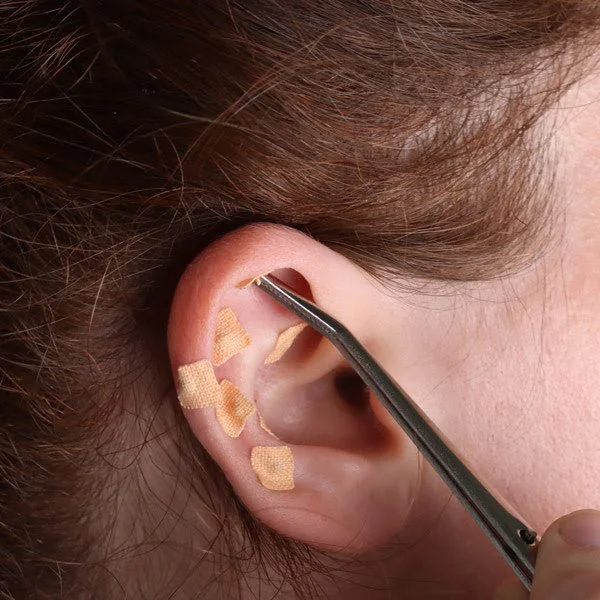
The scientific evidence regarding acupuncture for tinnitus is increasingly encouraging. More recent systematic reviews and network meta-analyses have shown favorable results. Several studies suggest acupuncture may significantly improve Tinnitus Handicap Inventory (THI) scores, perceived loudness, emotional distress, sleep quality, and overall quality of life.
Researchers are now investigating several mechanisms by which acupuncture may exert these effects. One major mechanism appears to involve autonomic nervous system regulation. Tinnitus sufferers often exist in a chronic sympathetic “fight-or-flight” state, particularly when the condition becomes emotionally distressing. Acupuncture has been shown in multiple studies to enhance parasympathetic activity and reduce sympathetic over-activation, potentially calming the nervous system’s hyper-vigilance response.
There is also growing interest in acupuncture’s effects on neuroinflammation and neuroplasticity. Experimental studies suggest acupuncture may influence neurotransmitter signaling, inflammatory pathways, and cortical network activity involved in tinnitus perception.
Clinically, we have observed improvement when treating the muscular and fascial components surrounding the neck, jaw, and scalp. This is particularly relevant for patients whose tinnitus fluctuates with posture, jaw movement, stress, or cervical tension.
Importantly, acupuncture is not necessarily aimed at “curing” tinnitus in every patient. Often, the goal is broader and more realistic: reducing severity, calming nervous system reactivity, improving sleep, lowering stress, decreasing emotional distress, and helping patients regain a sense of normalcy and resilience.

The Importance of Sleep and Stress Regulation
One of the most overlooked aspects of tinnitus management is the role of sleep deprivation and chronic stress. Poor sleep increases inflammatory signaling, impairs nervous system recovery, heightens emotional reactivity, and sensitizes the brain to sensory stimuli. Many tinnitus sufferers notice the ringing becomes dramatically louder after periods of insomnia, burnout, travel fatigue, emotional conflict, or chronic anxiety.
From a TCM perspective, insufficient rest depletes both Yin and Blood, impairing the body’s ability to anchor and calm excessive internal activity. The Heart and Kidney systems lose harmony, allowing agitation to rise upward toward the head and sensory organs. This is one reason integrative tinnitus treatment often includes more than acupuncture alone. Meditation, Qi Gong, Tai Chi, breath-work, sleep restoration, nervous system regulation, and lifestyle modification may all play important roles.
Practices that calm the nervous system may reduce the brain’s fixation on tinnitus. In many cases, patients report that the sound itself becomes less emotionally intrusive even if it does not disappear entirely.

A Broader Integrative Approach
Modern tinnitus management increasingly recognizes that successful treatment often requires a multidimensional approach rather than a single intervention.
Hearing protection remains important, particularly for those with ongoing exposure to loud noise. Excessive headphone use, chronic overstimulation, and repeated acoustic trauma may worsen auditory system sensitization over time. Addressing jaw tension, cervical posture, teeth grinding, and TMJ dysfunction can also be highly relevant, especially in somatosensory tinnitus patterns.
Nutritional approaches emphasizing anti-inflammatory foods, stable blood sugar, cardiovascular health, and reduced nervous system stimulation may also help some individuals. Patients frequently report worsening with excessive caffeine, alcohol, sodium, sleep deprivation, or prolonged stress. Conversely, some patients have reported benefits from taking magnesium, vitamin B12, D, coenzyme Q10, and ginkgo biloba.
From a TCM perspective, healing tinnitus is not only about suppressing sound. It is about restoring harmony within the entire system—the nervous system, emotional state, circulation, sleep rhythms, stress response, and internal balance between activity and restoration. In many ways, tinnitus becomes a mirror reflecting the overall state of the body and mind.
When the nervous system becomes calmer, sleep deepens, stress decreases, circulation improves, and the mind stops treating tinnitus as a threat, many patients experience meaningful improvement in both symptom severity and quality of life. While tinnitus remains a complex condition with no universal solution, acupuncture and Traditional Chinese Medicine offer a valuable integrative framework—one that addresses not only the ears, but the whole person.
If you or someone you know suffers from tinnitus, we invite you to speak with any of our doctors at Tao of Wellness to discuss a personalized, integrative treatment approach to help ease the condition and restore well-being.